Join the community.
Our Blogs
Why Herbalists Don't Just Google the Best Herb
We live in an age where answers are one search away. Type in a symptom and within seconds you have a list of supplements, a Reddit thread, and a wellness influencer telling you which herb changed their life.
And sometimes that information is genuinely useful. But it's not how clinical herbalism works — and understanding the difference might change how you think about plant medicine entirely.
The Problem with "Best Herb for X"
When we search for the best herb for a condition, we're asking the wrong question. We're starting with a label — a diagnosis, a symptom, a category — and working backward to a plant. Clinical herbalism works in the opposite direction.
A trained herbalist starts with the person. With the pattern. With what the body is actually doing right now — not what it's been named.
Two women can walk into a consultation with the same complaint: painful periods, hormonal imbalance, trouble conceiving. And they can walk out with completely different herbal support — because their bodies are presenting differently. One needs moisture and relaxation. The other needs circulation and tone. The complaint is the same. The pattern is not.
Every Plant Has a Medicinal Personality
One of the most useful things to understand about herbs is that each one has its own distinct set of actions — what herbalists sometimes call a medicinal personality. A plant isn't just good for one thing. It does several things simultaneously, which is exactly why matching the right plant to the right person matters so much.
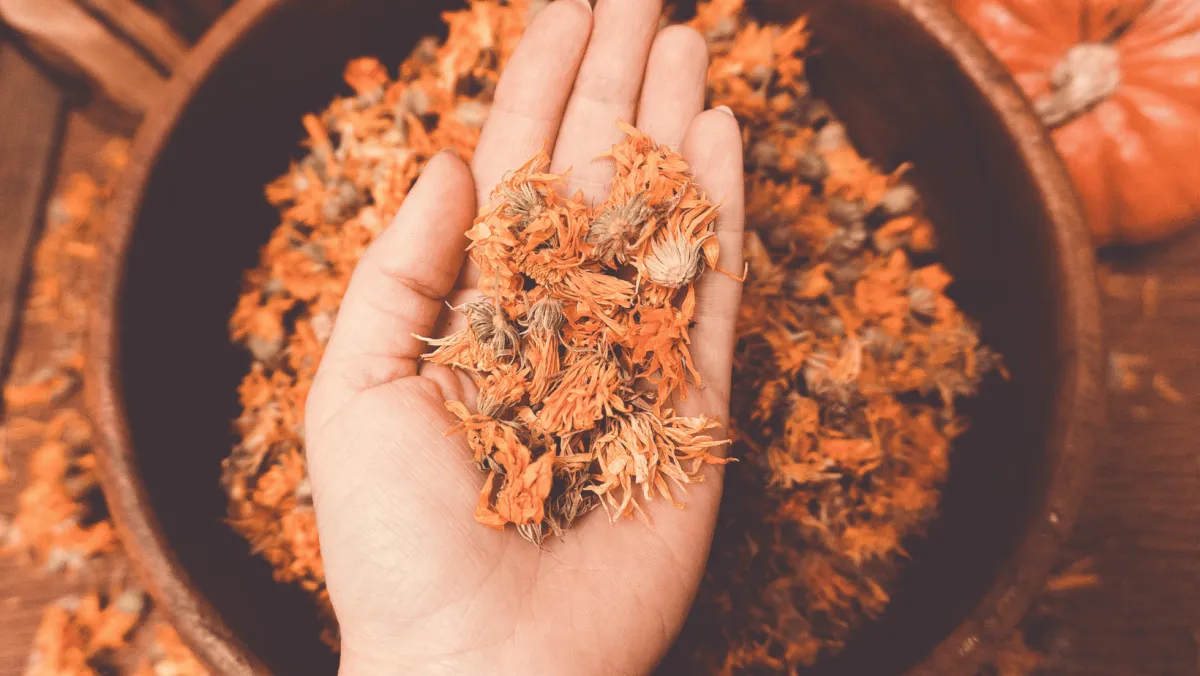
Take calendula. Most people know it as a skin herb. And it is — it supports tissue repair, soothes irritated membranes, and has been used for centuries in wound healing. But it also supports the lymphatic system. It's anti-inflammatory. It's gentle enough for the most sensitive tissue in the body. That's not a coincidence. That's a medicinal personality — a set of actions that travel together and make calendula the right choice for certain patterns, regardless of what condition someone has been diagnosed with.
Or take rose. People assume it's in herbal blends because it smells beautiful. And it does. But rose is also an astringent — meaning it tones and tightens tissue. That action has real physiological implications for pelvic floor health, vaginal tone, and tissue integrity. The fragrance is secondary. The medicine is primary.
Choosing Herbs Because of What They Do
This is the core of clinical herbalism: choosing plants because of what they actually do in the body — not because they're popular, not because they're trending, and not because a search engine associated them with a particular condition.
That requires knowing the plants. It requires understanding tissue states and body energetics — the framework herbalists use to read what the body is asking for. And it requires looking at the whole person, not just the diagnosis.
It also requires humility about what a label can and cannot tell you. A diagnosis gives a broad picture. It doesn't tell you whether this particular body is running hot or cold, dry or moist, tense or depleted. The pattern does. And the pattern is what the herbalist is trained to read.
What This Means for You
None of this means you shouldn't educate yourself about herbal medicine. Curiosity is a good starting point. But when it comes to choosing plants to support your health — especially for something as complex and personal as reproductive wellness — the question worth asking isn't what's the best herb for this condition.
It's what does my body actually need right now.
A clinical herbalist can help you answer that. Not with a Google result. With a real conversation, a careful assessment, and plants chosen for you specifically — not for the diagnosis you arrived with.


© Copyright 2026. Rootlight Collective. All Rights Reserved.