Join the community.

Our Blogs
Rose and Chamomile Are Not Just Pretty — The Medicinal Side of Familiar Herbs
There are herbs that have become so familiar they've lost their power in the popular imagination. Rose. Chamomile. Lavender. We associate them with bath products and candles, with things that smell nice and feel soothing. We forget — or never knew — that they are medicine.
Not metaphorically. Physiologically.
These plants have been used across cultures and centuries precisely because of what they do in the body. The fragrance is real. The beauty is real. And so is the medicine — and understanding it changes how you think about plants that have been sitting in your kitchen or your garden your whole life.
Rose: More Than Romantic
Rose is one of the most underestimated herbs in women's wellness. When people see it in a steam blend or a tea, they assume it's there for the experience — the scent, the softness, the ritual feeling of it. And those things matter. But they're not why a clinical herbalist reaches for rose.
Rose is an astringent. Astringency is the action of toning and tightening tissue — and that action has real, specific applications in the body. For women dealing with pelvic floor concerns, bladder tone, or vaginal tissue integrity, astringent herbs play a meaningful role in supporting the tissue itself. Rose doesn't dry tissue out. It tones it. There's an important difference — one that a trained herbalist understands and a wellness trend rarely explains.
Rose also has a long history of use as a nervine — an herb that supports the nervous system. That connection between nervous system support and pelvic health is not incidental. When the nervous system relaxes, the muscles soften. When the muscles soften, the pelvic floor releases. Rose works on both levels simultaneously, which is exactly what makes it so well suited to women's reproductive wellness.
Chamomile: Deeper Than Calm
Chamomile has become synonymous with relaxation to the point where we've stopped thinking of it as medicine at all. It's the tea you drink when you can't sleep. The thing your grandmother made when you had a stomachache. Sweet, gentle, safe.
All of that is true. And chamomile is also an anti-inflammatory, an antispasmodic, and a nervine with real physiological effects on smooth muscle tissue — including the uterus. Its traditional use for menstrual cramping isn't folk wisdom disconnected from mechanism. It's an herb with a long history of use for exactly the kind of tension and spasm that lives in the reproductive system.
Chamomile also shares with rose a dual action on the nervous system and the tissue itself. When the nervous system receives support, the body follows. Muscles that have been holding tension — sometimes for years, sometimes from experiences far older than the body remembers consciously — begin to release.
Lavender: The Bridge Herb
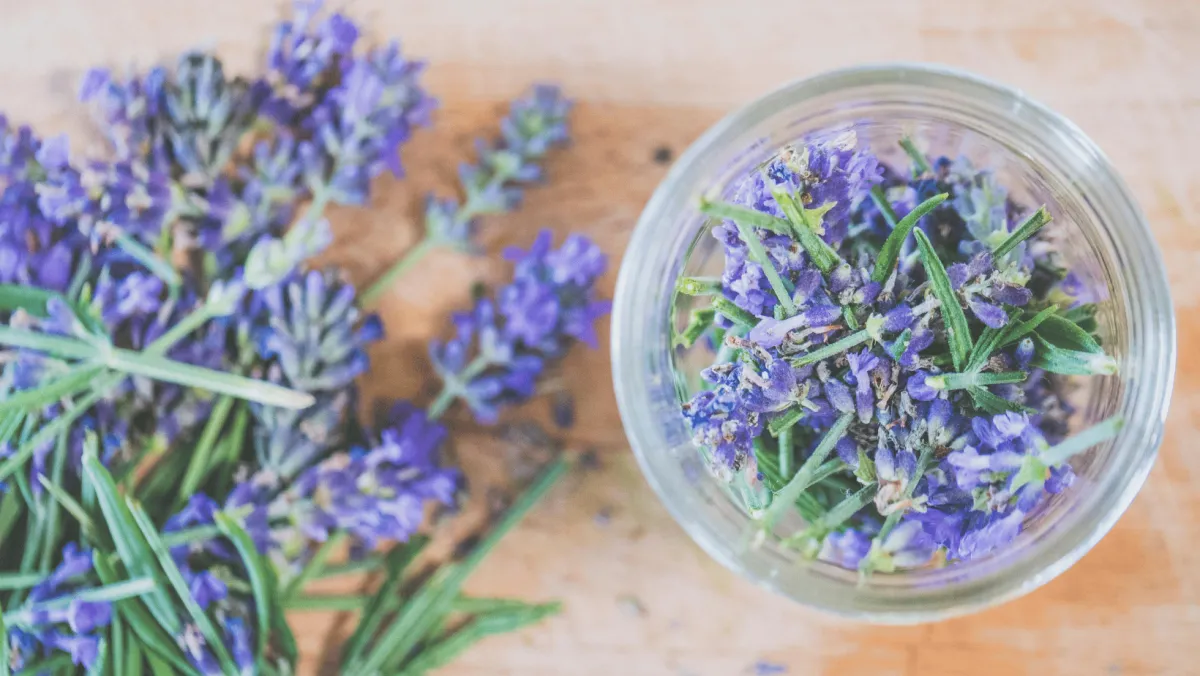
Lavender sits at the intersection of nervous system support and tissue care in a way that makes it indispensable in reproductive wellness work. It promotes relaxation. It softens muscle tension. It supports the kind of parasympathetic state where the body can actually receive healing rather than brace against it.
For women carrying trauma in the body — and a remarkable number of women are, whether they name it that way or not — herbs that support the nervous system are not a luxury addition to a protocol. They are foundational. The pelvic floor holds tension. The womb holds memory. Lavender, rose, and chamomile work together to create the conditions where that held tension can begin to move.
Why Familiar Herbs Deserve a Second Look
The herbs that have traveled with us the longest — through kitchens and gardens and grandmothers' remedies — have stayed because they work. Not because they're pretty, though they are. Not because they smell good, though they do. Because generations of healers observed what they did in the body and passed that knowledge forward.
Clinical herbalism takes that inherited wisdom and looks at it through the lens of physiology and tissue states — asking not just what has this plant traditionally been used for but what is this plant actually doing, and does this person's body need that right now.
The answer, for rose and chamomile and lavender, is often yes. Not because they're popular. Because they earn it.



© Copyright 2026. Rootlight Collective. All Rights Reserved.